
What Should Brands Do After Diwali?
The short answer
Take down your festive offers first, then look after the people who just bought from you: deliver well, thank them, and ask for reviews. Next, follow up with people who showed interest but didn't buy, and write down what worked while you still remember it. After that, move to your next occasion, which in 2026 is wedding season from late November for many categories, followed by year-end sales and Republic Day.
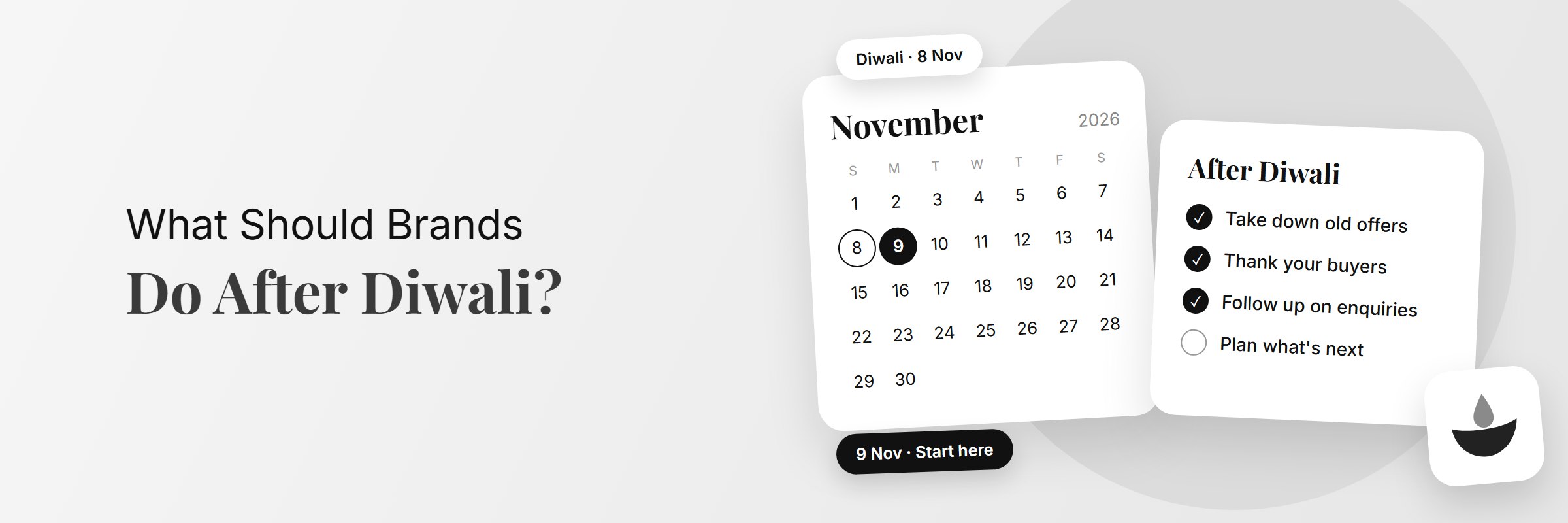
Most festive plans end on Diwali morning. The greeting goes out, the team takes a break, and when everyone comes back, the feed is still showing a Diwali offer that ended days ago.
Yet this is when you have the most to work with. New customers have just bought from you, plenty of people showed interest but didn't buy, and you've just seen what your audience really responds to. Here's what to do with all of that, in the order we'd do it.
What should you do first after Diwali?
Clean up everything that still says Diwali. Before you make anything new, make sure nobody is seeing an offer they can no longer get. It takes an hour or two, and it's the step most brands forget.
Check these places:
- Ads: pause or update anything that mentions the festival, the offer or a deadline.
- Instagram: your bio, pinned posts, story highlights and profile link.
- Website: banners, pop-ups, offer codes and landing pages.
- Google Business Profile: festive posts and any special opening hours.
- WhatsApp: your catalogue, away message and any automatic replies.
If your offer runs until a set date, end it on that date. Extending it "by popular demand" feels harmless, but it teaches people to wait the next time you announce a deadline.
How do you look after people who just bought from you?
Finish the sale properly, because the purchase isn't the end of the experience for the customer. The gift still has to arrive on time, the car still has to be handed over, and the customer may still have a question nobody has answered.
Late deliveries, returns and unanswered DMs all pile up in the days after Diwali. Sort these out before you start promoting anything new. Someone still waiting for a reply won't be pleased to see your next offer.
Once the order is delivered:
- Say thank you, personally if you can. A short message that mentions what they bought works better than a mass greeting.
- Ask for a review while it's fresh. Ask soon after delivery, and send the direct link so it takes one tap.
- Ask before you share customer photos. Unboxings and handover pictures are some of the best content you'll have all year, but get the customer's permission first.
What should you post after Diwali?
Post what happened. For a few days, real deliveries, reviews, customer photos and behind-the-scenes moments will feel more honest than another designed creative. Then return to your normal content.
| Timing | What to post | Why it helps |
|---|---|---|
| Right after Diwali | A simple thank-you | Closes the campaign without selling |
| First week | Deliveries, unboxings, customer photos, reviews | Gives people who didn't buy a reason to trust you |
| Second week | Answers to questions customers asked during the festive rush | Turns real DMs into useful content |
| After that | Your regular content, and your next occasion | Stops the feed feeling like it ended with the festival |
You don't have to post every day during this stretch, and a quieter week is fine. Just avoid putting out weak filler. A low-effort post won't help, and posting more doesn't fix reach on its own anyway.
How do you follow up with people who didn't buy?
Treat them as a separate group, and find out why they didn't buy. Someone who messaged you for a price, saved a post or added something to their cart has told you they're interested, and that doesn't vanish on Diwali night.
The usual reasons, and what to do about them:
| What held them back | What to say next |
|---|---|
| The price | Explain what's included and why it's worth it, or offer a payment option if you have one |
| They needed more time | Remind them gently, with no festive deadline attached |
| They weren't sure about you | Show reviews, delivery photos and real customers |
| It was out of stock | Tell them it's back, personally |
| They just forgot | A short, direct message with the link |
Go through your DMs and enquiries by hand if the numbers are small. If you run ads, you can also show this content again to people who visited your site or engaged with your account. Only message people on WhatsApp or SMS if they've agreed to hear from you.
Try not to answer this group with a bigger discount straight away. People who paid full price last week will notice, and everyone else learns that waiting gets them a better deal.
How do you get festive buyers to come back?
Give them a reason that fits what they bought. A festive buyer is easier to sell to again than a stranger, but only if the next message is useful to them.
- Care tips or how-to guides for anything that needs looking after, like jewellery, clothing or skincare.
- The next logical purchase, like a refill, an accessory or a matching product.
- A service reminder for cars, appliances or anything else that needs regular upkeep.
- A referral offer, sent after they've had time to enjoy the purchase.
Save their details properly while you have them: what they bought, when, and how they found you. Next year's festive campaign gets much easier when you can start with the people who already bought from you.
What should you write down before you forget?
Write down what worked this week, while it's still fresh. By next August, nobody will remember which reel sold and which one only got likes. A one-page note is all you need.
Answer these:
- Which creatives brought in sales or enquiries? Not just the ones with the most likes.
- Which offer worked best, and which one nobody asked about?
- When did people actually buy? Compare Navratri, Dussehra, Dhanteras and Diwali week.
- Which channel brought the buyers? Instagram, ads, WhatsApp, Google or word of mouth.
- What did customers keep asking? That's your content list for next year.
- What went wrong? Delays, late approvals, stock problems or printers who said no.
Put it next to your Diwali marketing timeline and you already have a head start on next year's plan.
What should brands plan for after Diwali?
Pick the next one or two occasions that fit your business and ignore the rest. You don't need a campaign for every date in the calendar. For most Indian brands, these are the ones worth checking:
| Occasion | 2026–27 date | Most useful for |
|---|---|---|
| Bhai Dooj | Wednesday, 11 November | Gifting, and the last of the festive buying |
| Wedding season restarts | From Dev Uthani Ekadashi, Friday, 20 November | Jewellery, clothing, beauty, gifting, venues, travel, food, photography |
| Black Friday | Friday, 27 November | E-commerce and online services |
| Christmas and New Year | 25 December and 1 January | Food, gifting, travel, events, year-end offers |
| Makar Sankranti | Thursday, 14 January | Regional brands, food, gifting |
| Republic Day | Tuesday, 26 January | Retail and e-commerce sales |
| Valentine's Day | Sunday, 14 February | Gifting, food, beauty, jewellery |
Wedding dates follow the panchang and vary by region and community, so check them for your market before you lock a calendar.
If you're in a wedding category, start now, because the people planning those weddings are already looking. If you sell to other businesses, this can be a good time to talk to the clients you couldn't reach while they were busy with Diwali, and to start planning for the new financial year.
A simple plan for the two weeks after Diwali
For 2026, with Diwali on 8 November, the two weeks look like this:
| When | What to do |
|---|---|
| 9 November | Remove or update expired offers everywhere. Post your thank-you |
| 9–11 November | Clear pending DMs, complaints and deliveries |
| 10–14 November | Ask for reviews and start sharing customer content |
| 11–15 November | Follow up with people who showed interest but didn't buy |
| By 15 November | Write your one-page note on what worked |
| 16–22 November | Lock your next occasion and return to your regular content |
None of this needs a big budget. Most of it is just follow-through, and that's why it's easy to skip when everyone's tired after the festive rush.
If you'd rather not plan the next few months alone, have a look at how we build content and social systems and run performance marketing, or start a conversation with us.